

Personal development is becoming essential for sustainability professionals. The complexity of the work, the emotional weight of global challenges, and the constant need to influence without authority demand more than technical competence.
The professionals who thrive are those who invest in self-awareness, emotional intelligence, grounded presence, and leadership skills. Growth becomes both an inner and outer journey.
This article offers a simple, practical starting point. It blends personal reflection with actionable development steps tailored to the realities of sustainability work.
Why Personal Development Matters in Sustainability
Sustainability roles come with their own unique challenges. You navigate competing pressures, balance long-term goals with short-term demands, and often carry the emotional burden of knowing what is at stake.
Many sustainability professionals sit alone in their role. They face resistance, slow internal progress, and limited resources. This creates tension between ambition and capacity; over time, this can lead to burnout or a sense of misalignment.
Personal development sustainability should not be optional. It is the foundation that strengthens clarity, resilience, and influence. When you grow internally, your ability to drive external impact expands.
Where You Can Start: A Practical Step-by-Step Path
1. Build Self-Awareness
Self-awareness sustainability begins with understanding your patterns. Notice what drains you, what energizes you, and how your values guide your decisions.
Simple practices help:
- Keep a weekly reflection journal
- Ask yourself, “What mattered most today and why?”
- Pay attention to your reactions in meetings or difficult conversations
When you understand your inner landscape, you lead from intention instead of autopilot.
2. Strengthen Emotional Intelligence
Emotional intelligence supports influence, connection, and communication. Sustainability work moves through relationships. How you show up matters as much as what you know.
Areas to explore:
- Recognizing emotional triggers
- Practicing empathy in stakeholder dialogues
- Using conscious communication when navigating resistance
- Offering curiosity instead of defensiveness
Research on emotional intelligence repeatedly shows that leaders who understand their own emotions build trust more effectively and foster stronger collaboration.
3. Develop Mindfulness and Grounded Presence
Mindfulness for sustainability professionals is not about meditation alone. It is about cultivating presence in the middle of complexity.
Working in sustainability requires groundedness. Deadlines, targets, KPIs, and crisis narratives can pull you into urgency. Grounded presence helps you stay steady.
Relevant research from Harvard Business Review and MIT Sloan shows that mindful leaders are more resilient, more creative, and better able to navigate demanding environments. Presence strengthens your leadership because it clarifies perception and reduces reactivity.
Practical entry points:
- Three deep breaths before important meetings
- Short pauses during the day
- Mindful walking or reflective breaks
These small practices shift your nervous system and support long-term resilience.
4. Invest in Your Leadership Skills
Leadership development is not tied to job titles. You lead by how you communicate, collaborate, and frame sustainability within the organization.
Skills to prioritize:
- Communication and framing
- Influence without authority
- Systems thinking
- Cross-functional collaboration
- Courageous conversations
Leadership is a behavior. When you build these muscles, you move from pushing sustainability forward to guiding others into shared ownership.
5. Engage in Peer Learning and Community
Sustainability work becomes lighter and more effective when shared with others who understand it.
Peer learning provides:
- New perspectives
- Emotional support
- Accountability
- A sense of belonging
Many professionals benefit from communities that offer peer support, reflection, and practical guidance, such as HeartWork. Connection accelerates growth.
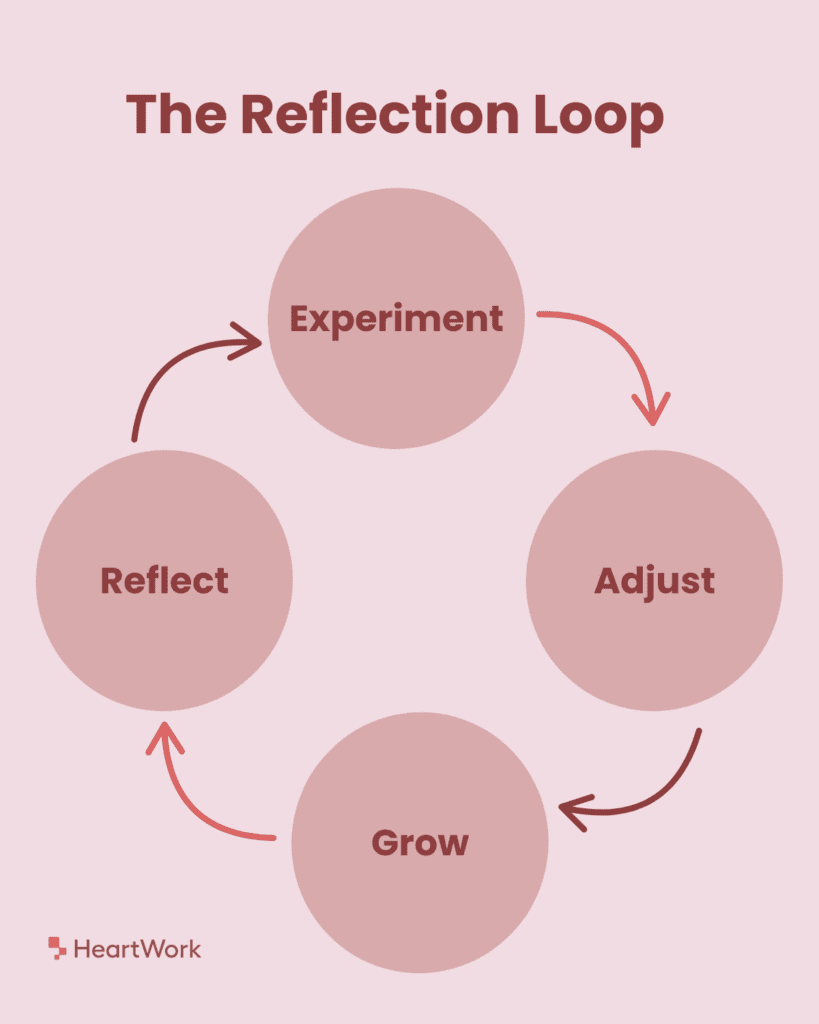
6. Experiment, Reflect, Adjust
Personal growth is not linear. It evolves through cycles. Try small experiments. Reflect on the results. Adjust and try again.
Examples:
- Practice pausing before reacting
- Test a new communication approach
- Set boundaries around energy-draining work
- Attempt a new way of framing sustainability for leadership
Reflection turns experience into insight. Adjustments turn insight into progress.
Common Mistakes Professionals Make at the Start
Focusing only on technical learning
Technical knowledge is essential, but personal development fuels influence and resilience.
Ignoring emotional and mental well-being
Sustainability work carries emotional weight. Ignoring it leads to exhaustion.
Trying to grow alone
Isolation slows progress. Growth accelerates with peers, mentors, and community.
Expecting a quick transformation
Personal development is gradual. What matters is consistency, not speed.
A More Human Approach to Growth
Growth requires compassion. Sustainability professionals often hold themselves to high standards. The work is urgent, and the stakes feel personal.
A human approach recognizes that development must fit the person, not the other way around. This includes:
- Listening to your own needs
- Setting boundaries
- Honouring your energy
- Celebrating small wins
When inner alignment strengthens, your outer influence becomes clearer, calmer, and more sustainable.
Conclusion
Personal development is the foundation of effective sustainability leadership. When you strengthen self-awareness, emotional intelligence, presence, and leadership skills, you step into a more grounded and impactful version of yourself.
Growth does not require dramatic reinvention. It begins with simple, intentional steps.
HeartWork provides sustainability professionals with guidance, tools, and peer support to deepen their personal and leadership development.
Explore the community when you are ready for the next step in your journey.